Arch Manning's Average Performance Sparks Debate in College Football

Arch Manning, the Texas Longhorns quarterback, has been thrust into the spotlight not just for his skills on the field but also due to his famous last name. Despite the hype surrounding him, a recent analysis has labeled him as college football's most average quarterback, raising questions about his performance and the expectations placed upon him.
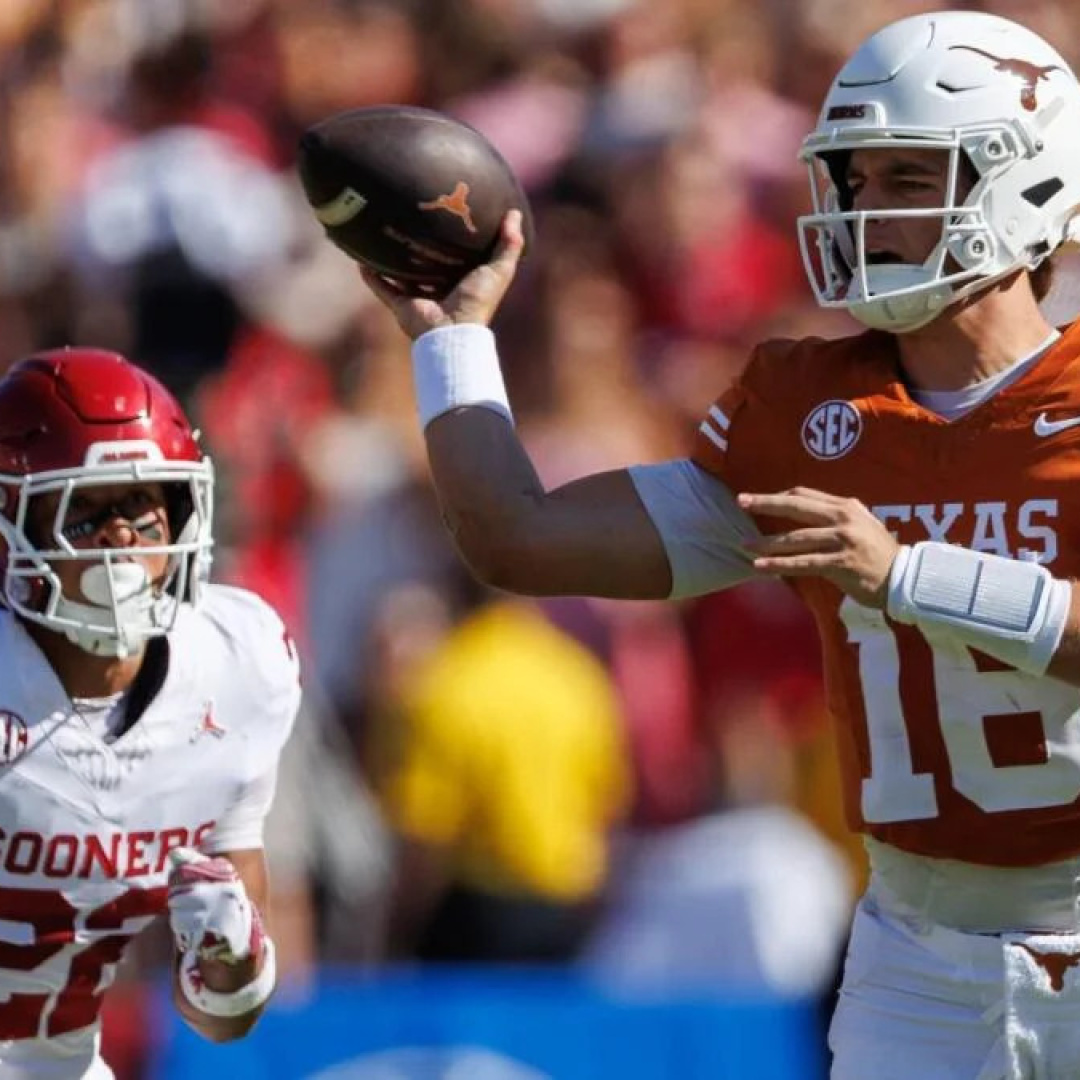
In a recent game against Oklahoma, Manning's performance was scrutinized after he threw two late interceptions, including a pick-six that contributed to his team's loss. He completed 19 of 31 passes for 260 yards and three touchdowns, but the turnovers overshadowed his overall statistics. This loss has reignited criticism of Manning, prompting head coach Steve Sarkisian to come to his defense during a press conference. Sarkisian argued that if Manning's name were removed from his jersey and he were simply viewed as a quarterback named "Joe Smith," the perception of his performance would be different.
Sarkisian highlighted Manning's achievements, noting that he has beaten four Top-10 ranked teams in his last 13 starts, suggesting that the high expectations surrounding him are partly to blame for the criticism he faces. However, the reality remains that Manning's statistics do not reflect the superstardom that many anticipated. Columnist Kirk echoed Sarkisian's sentiments but pointed out that Manning's average passer rating of 143.31 places him squarely in the middle of the pack among college quarterbacks. This statistic, while not poor, indicates that Manning's performance has not lived up to the lofty expectations set for him.
Critics have noted that Manning's ranking of No. 42 in passer rating last season and No. 64 this year, trailing behind other quarterbacks, underscores the inconsistency that often characterizes college football. Kirk's analysis suggests that Manning's performance is a rollercoaster of highs and lows, which is not uncommon in the college game. He argues that while Manning may not be the worst quarterback at this level, he certainly isn't the best either.
Impact of Texas' rushing attack on Manning
One factor contributing to Manning's struggles is the performance of the Texas Longhorns' rushing attack, which has ranked poorly in recent seasons. Sarkisian acknowledged the need for improvement in the running game, stating that it is difficult for any quarterback to succeed without a reliable run threat. The Longhorns' rushing attack ranked No. 84 last season and has dropped to No. 117 this year, further complicating Manning's ability to perform at a high level.
As the season progresses, the pressure on Manning will only increase. The expectations are high, not just for him but for the entire Texas program. The scrutiny he faces is a reflection of the immense pressure that comes with being a highly touted quarterback in college football. Whether he can rise to the occasion and improve his performance remains to be seen, but one thing is clear: the narrative surrounding Arch Manning is far from settled.
The Final Whistle
The challenges that come with being a high-profile quarterback like Manning are significant. Fans and analysts alike expect greatness, and any deviation from that standard can lead to harsh criticism. Manning's journey is a reminder of the complexities involved in college football, where talent alone does not guarantee success. As he navigates the pressures of his position, it will be crucial for him to find a way to elevate his game and meet the expectations that have been set for him.
In conclusion, Arch Manning's performance thus far has sparked a debate about the nature of expectations in college football. While he may not be the standout star many envisioned, his journey is still unfolding. The Longhorns' coaching staff and fans will be watching closely to see if Manning can harness his potential and lead the team to success, or if he will continue to be viewed as just another average quarterback in a sea of talent. The coming weeks will be critical for Manning as he seeks to redefine his narrative and prove that he is more than just a name.