Turkey condemns police violence against Beşiktaş fans in Georgia
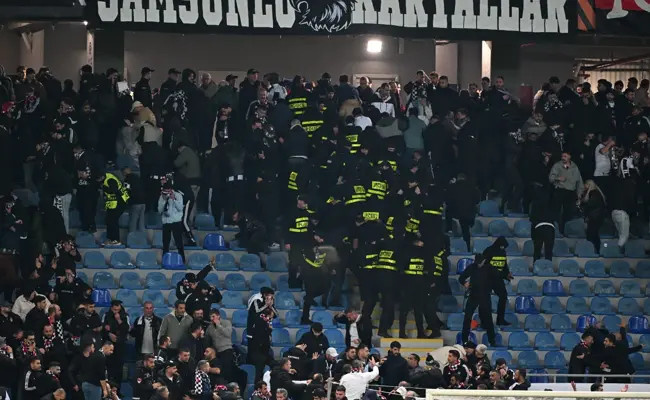
Turkey has voiced strong condemnation of police actions taken against Beşiktaş supporters during a UEFA Europa League match held in Georgia on November 26. The incident occurred during the Istanbul club's match against Israel's Hapoel Beer-Sheva in Batumi, where fans displayed Palestinian flags and a banner reading "Free Palestine." In response to the situation, Turkish ministers have called for the protection of Turkish citizens abroad and legal repercussions for those responsible for the violence.
Reports indicate that police used pepper spray in the stands, leading to a suspension of the match for approximately half an hour. Despite the disruption, Beşiktaş managed to secure a 2-1 victory. Following the match, Turkish media reported that nearly all detained Turkish citizens had been released, and Beşiktaş president Serdal Adalı confirmed that two injured supporters had been discharged from the hospital.
In a show of support, President Recep Tayyip Erdoğan reached out to Adalı, expressing his concern and commitment to monitoring the developments closely. Foreign Minister Hakan Fidan also engaged with his Georgian counterpart, Maka Botchorishvili, to discuss the situation of the supporters and ensure their safety.
Justice Minister Akın Gürlek has taken steps to address the issue, requesting the immediate release of detained Turkish citizens and calling for legal action against those involved in the violent incidents. Interior Minister Mustafa Çiftçi echoed these sentiments, raising concerns about the excessive use of force with his Georgian counterpart, Sulkhan Tamazashvili. Çiftçi noted that Tamazashvili attributed the removal of Palestinian flags to UEFA officials rather than the Georgian state.
The Georgian Interior Ministry reported that 16 individuals were detained during the incident, with three police officers sustaining injuries. They denied that the police intervention was due to the display of Palestinian flags, stating that confrontations began during the supporters' march to the stadium. Communications Director Burhanettin Duran emphasized that peaceful expressions of solidarity with the Palestinian people should never justify violence or police intervention.
Reactions and implications for fan safety
The incident has drawn widespread condemnation from various sectors, including opposition leaders and Turkish football clubs, who have expressed solidarity with the affected supporters. Ruling Justice and Development Party (AKP) spokesman Ömer Çelik criticized UEFA for perceived double standards and urged Georgian authorities to investigate the orders behind the police intervention.
This incident raises significant questions about the safety of fans at international matches and the responsibilities of host nations to protect their rights. As Turkey continues to demand accountability and protection for its citizens, the implications of this event may resonate beyond the immediate aftermath, affecting future international sporting events and the treatment of fans abroad.
The Final Whistle
The actions taken by Georgian police against Beşiktaş supporters not only highlight the immediate risks faced by fans but also underscore the broader implications for international sporting events. As Turkish officials push for accountability, the need for enhanced safety measures and protocols for protecting fans at such events becomes increasingly clear. The situation serves as a reminder of the delicate balance between maintaining order and respecting the rights of supporters, particularly in politically charged environments.
As the dust settles on this incident, the focus will likely shift to how UEFA and host nations address fan safety in the future. The Turkish government's strong response reflects a commitment to protecting its citizens abroad, but it also raises questions about the responsibilities of international sporting bodies in ensuring that all fans can enjoy matches without fear of violence or repression. The outcome of this situation could set important precedents for how similar incidents are handled in the future, emphasizing the need for dialogue and cooperation between nations and sporting organizations.